
Surrogacy in Albania
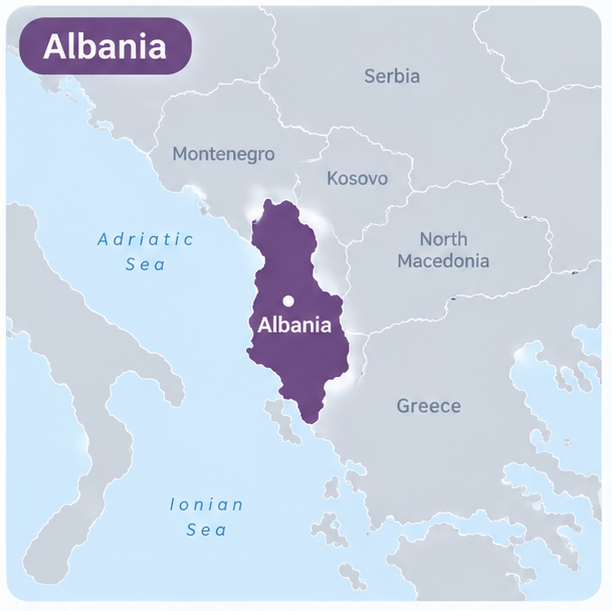
Albania has become an accessible option in Southern Europe for families who cannot use surrogacy in their home country or who are not eligible in other destinations. The country is close to most European cities, many nationalities can enter without a visa, and its clinics already work with international patients on IVF and egg donation.
Flexible access. Albania has no statute that limits surrogacy to a specific family type, so single intended parents, heterosexual couples, and in practice other families can take part. At least one intended parent must have a genetic link to the child.
Short travel and easy entry. Citizens of many countries enter Albania visa-free for a stay of up to 90 days, and others can apply for an e-visa. Flights from major European cities are short, which helps when your program requires several visits.
Established IVF medicine. Embryo creation, genetic testing of embryos, and egg donation are routine procedures in the clinics we work with.
We believe you should hear this clearly before you choose a country.
Albania has no specific surrogacy law. The practice is neither explicitly permitted nor prohibited, and it operates in a legal grey area. The medical process is carried out under clinic protocols and a written agreement between the parties.
At birth, the surrogate is the child's legal mother by default. Intended parents are not registered automatically. Parentage is established after the birth through a court procedure, and our lawyers lead you through it.
The result depends on the court. Because there is no dedicated law, the outcome of the procedure is not guaranteed in advance. That is why we prepare the case from the first day: the contract, the medical documents, the genetic evidence, and your home country's requirements are all organized before the birth, not after.
Your home country's rules matter as well. Countries differ in how they recognize a child born through surrogacy abroad. We recommend consulting a lawyer in your country before you sign, and we tell you which documents your embassy typically asks for.
The contract. It is signed before treatment starts and covers the surrogate's compensation, monthly allowances, medical costs, and what happens in complications such as premature birth or a C-section.
Our programs in Albania start from €50,000. The final cost depends on the program you choose and on decisions that are yours to make:
- Egg donor. Whether you need one and how she is matched.
- Genetic testing of embryos (NGS). How many embryos you want to test.
- Twins. A multiple pregnancy places a heavier load on the surrogate and increases her compensation.
- Legal procedure after birth. The court procedure is part of the budget, so we show it in the plan from the beginning.
- C-section and paternal DNA test. Paid separately, only if needed.
Payment is made in stages tied to milestones, such as contract signing, confirmed pregnancy, the 12-week screening, and delivery. You never pay the full amount upfront, and we go through the complete budget with you at the first consultation.
In gestational surrogacy, the surrogate has no genetic link to the baby, so her appearance does not affect the program. What matters is medical suitability, and this is why the doctor's opinion carries the most weight in the selection.
Before a woman joins our database, she passes medical checks and an interview. Our doctors then assess each candidate for your program: her examination results, previous pregnancies and births, the health of her own children, and her readiness for the embryo transfer. We always follow the doctor's decision, because it directly affects your chances of a healthy pregnancy. Within the group of medically approved candidates, you review the profiles and make the final choice. If a replacement becomes necessary, the doctor's assessment applies again before a new candidate is presented to you.
